Every scope. Every overlay.
See exactly what your signal is doing.
videoscope.app turns any camera, capture card, video, or still into a broadcast-grade inspection suite — right in the browser, 100% client-side. Here's every tool it gives you, shown on real footage and on color bars.
Source
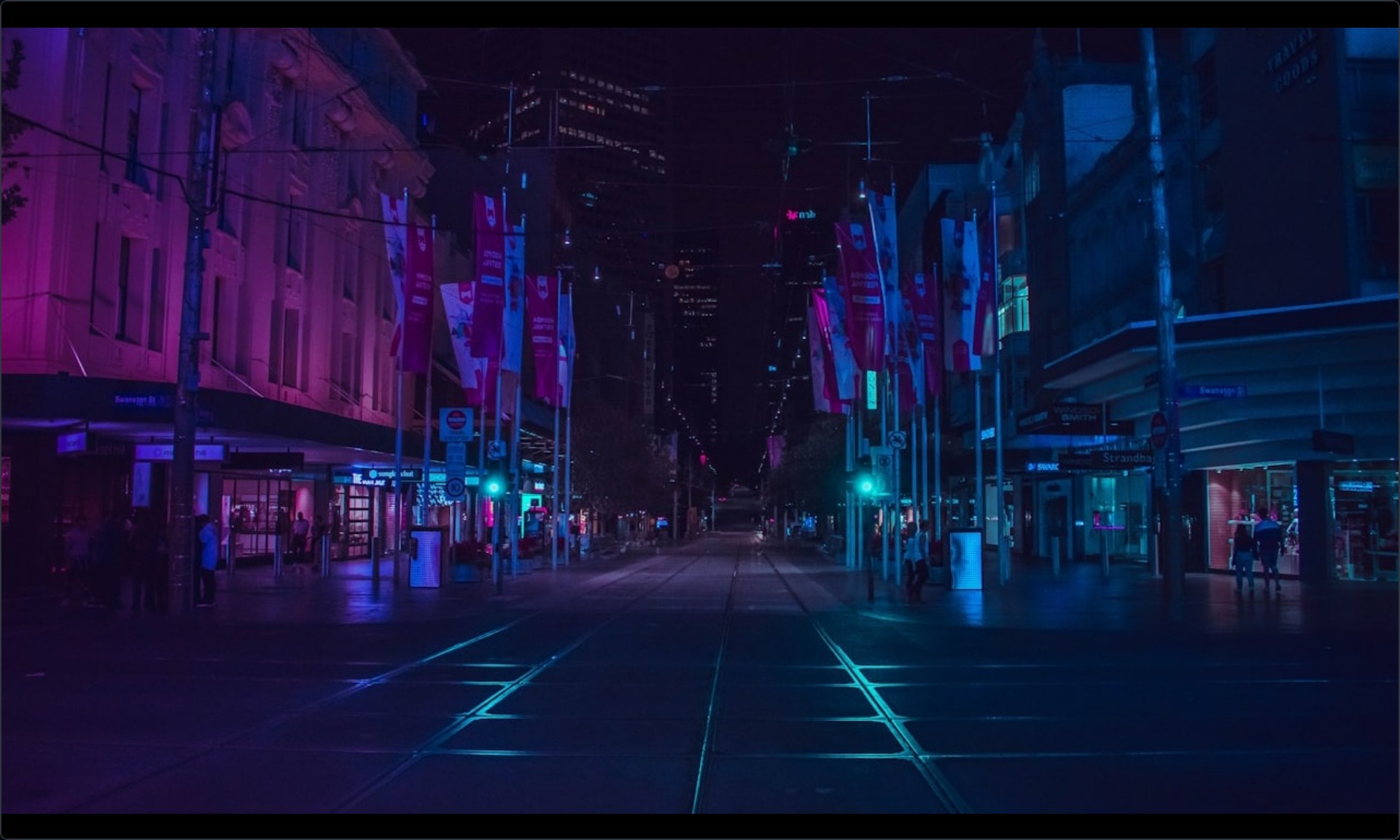
Feed it anything
A camera, a USB capture card, or a file you drop — everything runs through the same pipeline, so every scope and overlay works on all of them.
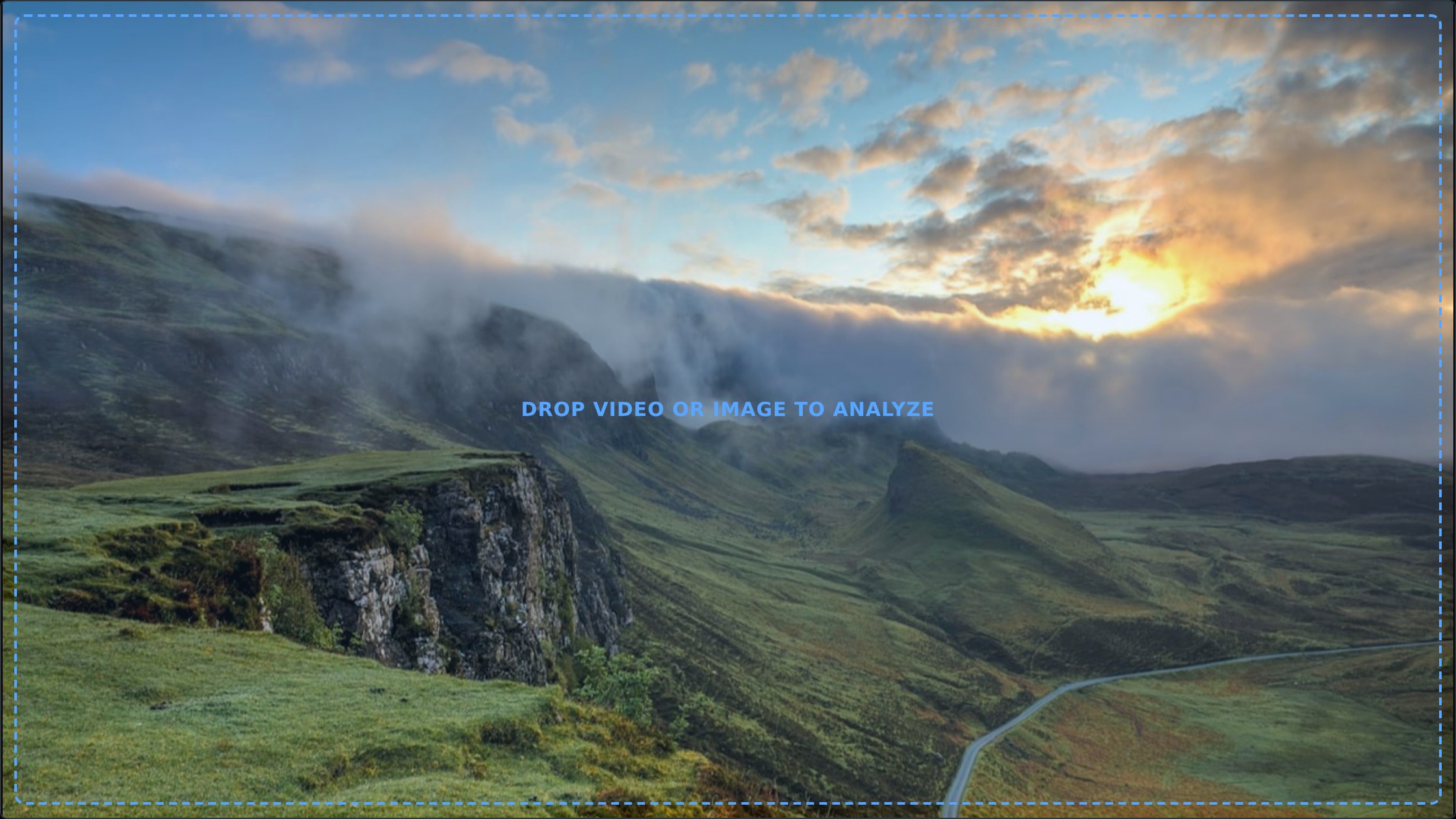
Drag & Drop Stills & Video
drop a fileDrop any image or video straight onto the workspace and every scope and overlay reads it instantly — the exact same pipeline as a live camera. Perfect for checking a frame grab, a render, a graded clip, or a reference still. Nothing is uploaded; the file never leaves your browser.
Overlays
Confidence on the picture
Non-destructive overlays painted straight onto the image — expose, focus, and frame without ever leaving the shot.
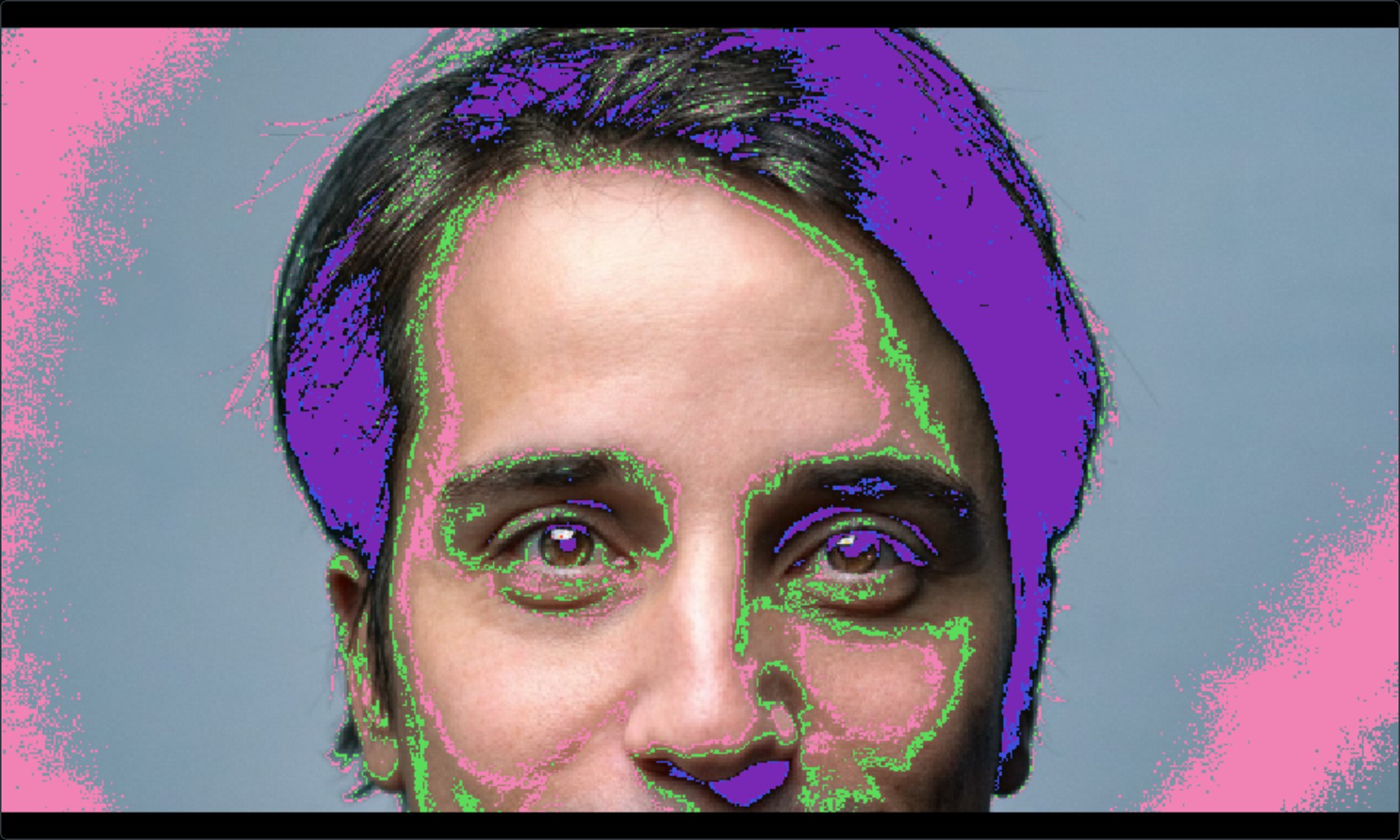
False Color
C · ⇧CMaps exposure to color (ARRI 709 / EL Zone). Green reads a properly-exposed key; pink flags clipping, purple flags crushed shadows — nail exposure without a meter.
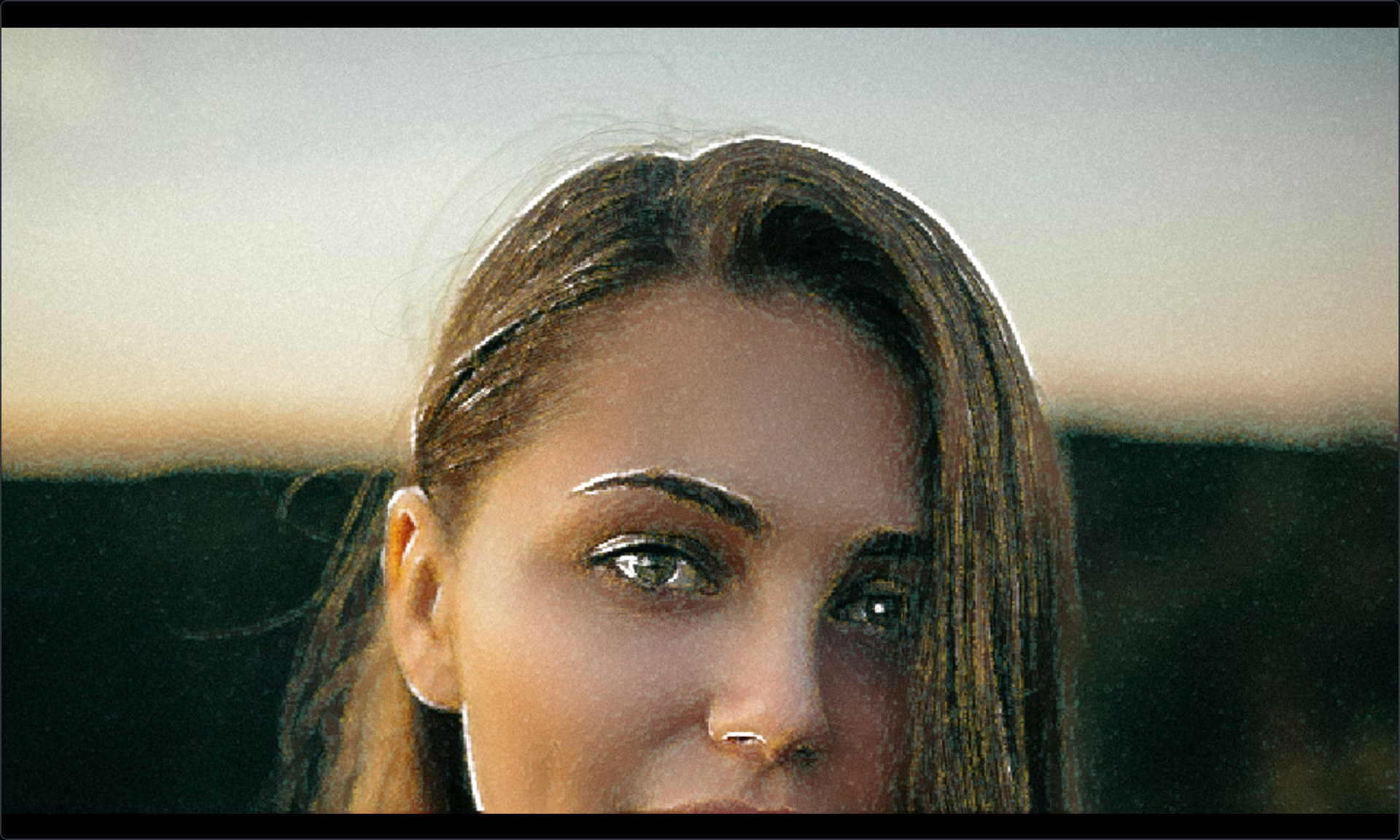
Focus Peaking
KSobel edge detection lights up in-focus edges in three tiers. Pull critical focus on eyes and fine texture with confidence, even on a small display.
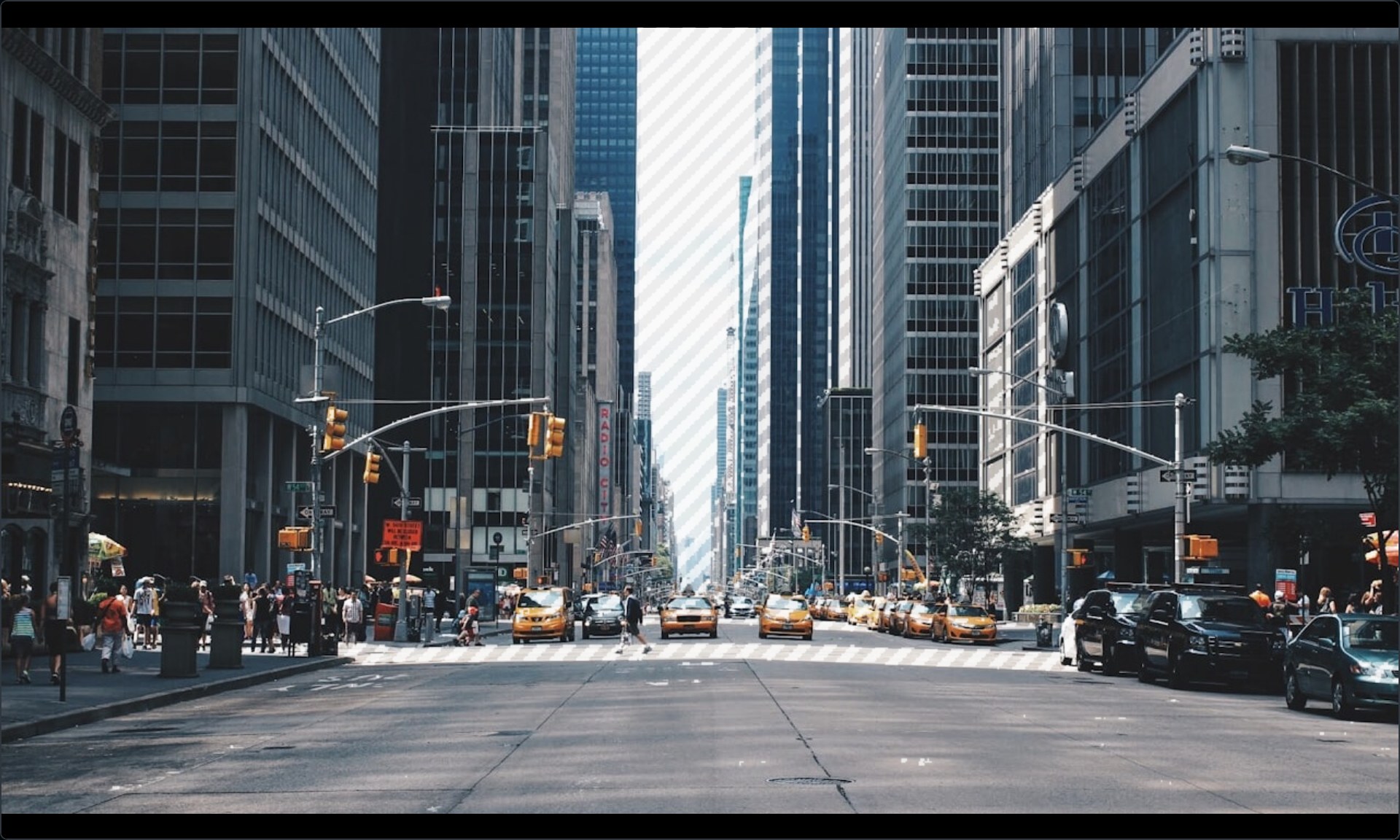
Zebra
ZDiagonal stripes over everything past an IRE threshold — 70 IRE for skin, 100 IRE for clipping. The fastest way to catch blown highlights while you shoot.
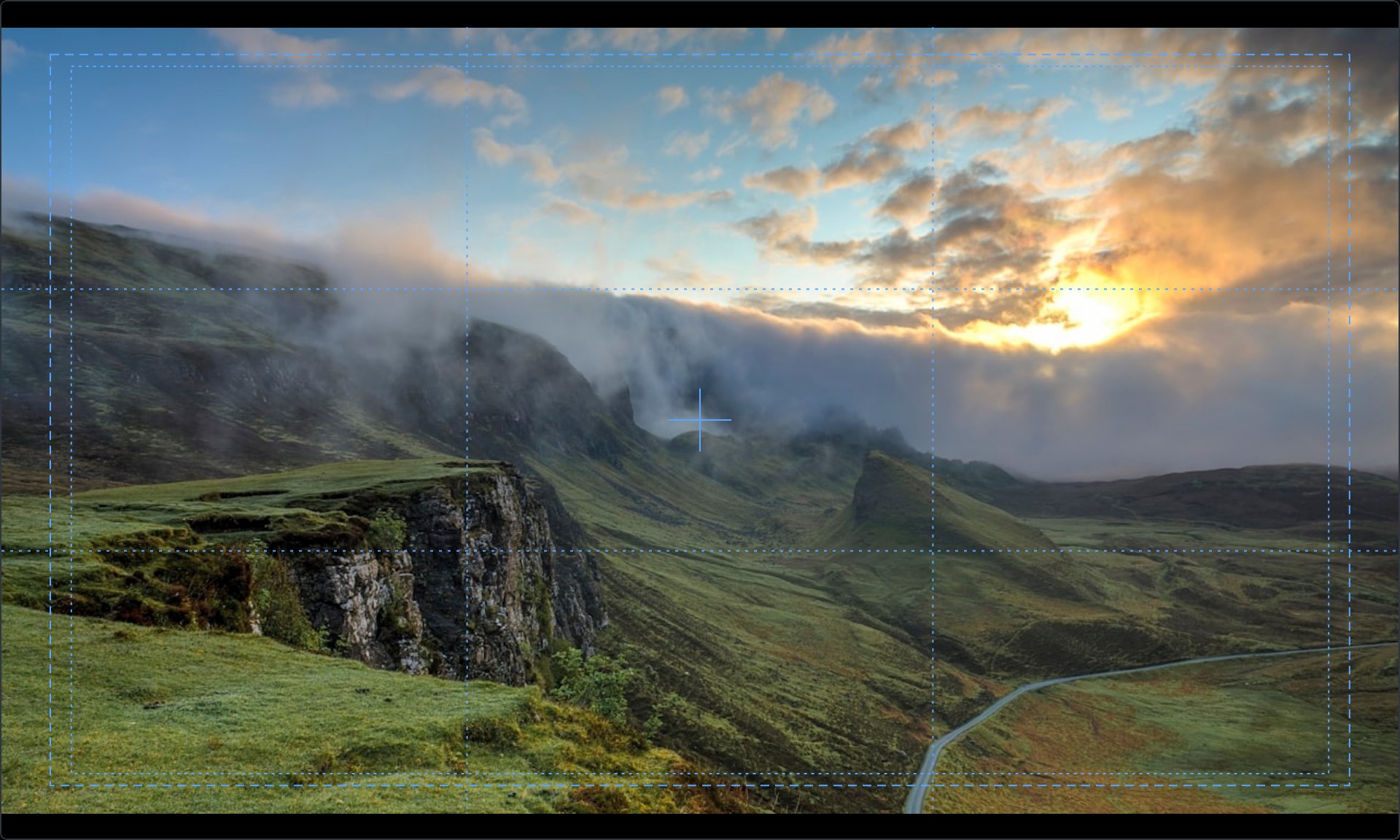
Frame Guides
G16:9 / 4:3 action & title safe, center cross, rule of thirds, pixel grid, and custom letterbox masks (2.39:1 and friends). Frame to spec, every time.
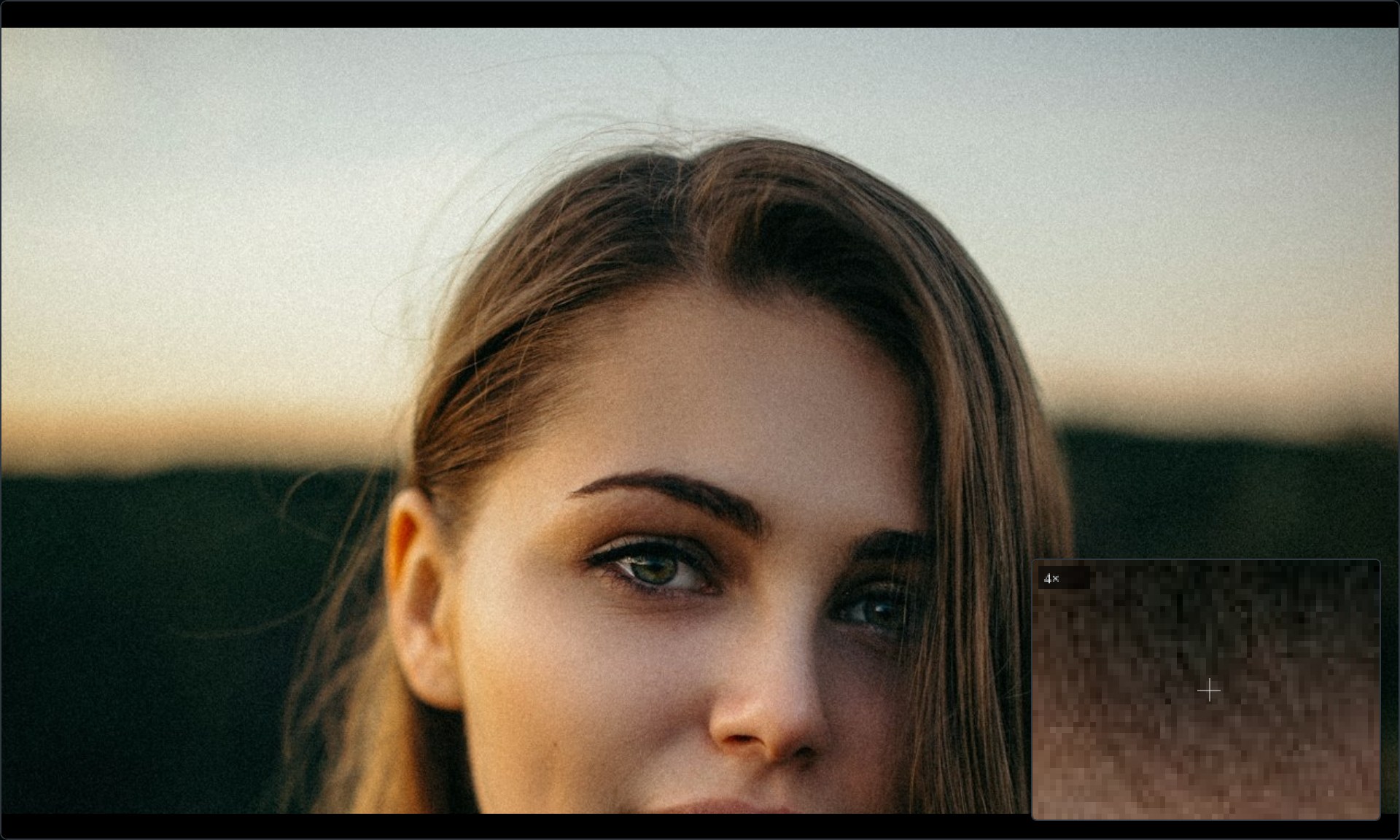
Loupe
M · ⇧MA pixel-accurate PIP magnifier that follows the cursor (2× / 4× / 8×). Click to lock it on a point — check focus and fine detail without a 1:1 zoom.
Waveform & Levels
Read exposure and balance
Per-column waveforms and per-channel level tools, computed live from the source. Shown on 75% color bars and on real footage.
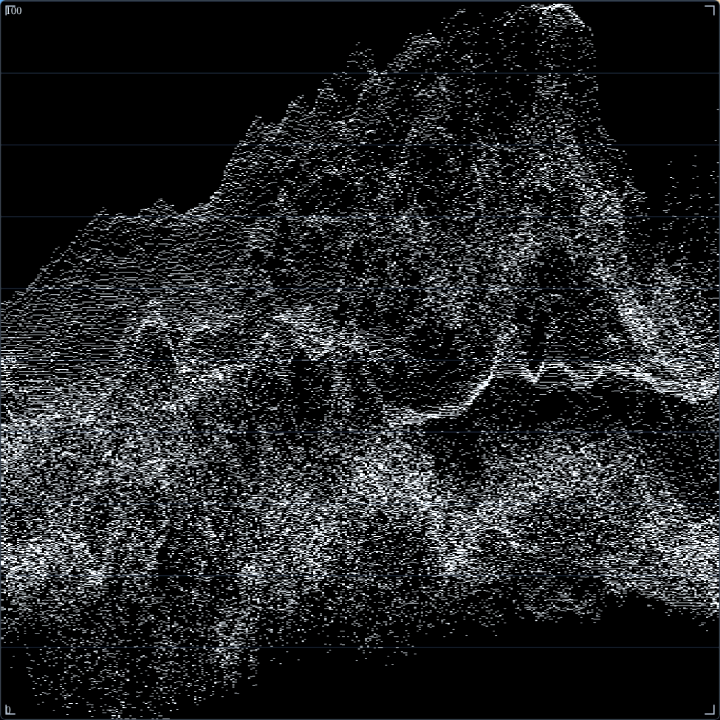
Waveform · Luma
Per-column luminance with an IRE graticule. The trace mirrors the frame left-to-right, so black level, exposure, and clipping read at a glance.
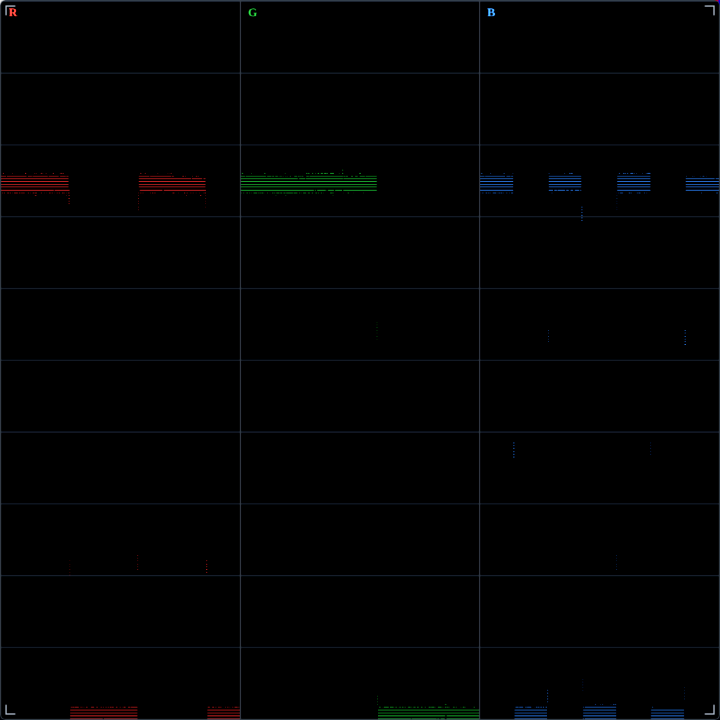
RGB Parade
Red, green, and blue waveforms side by side. Compare channel balance to spot color casts and set neutral shadows and highlights.
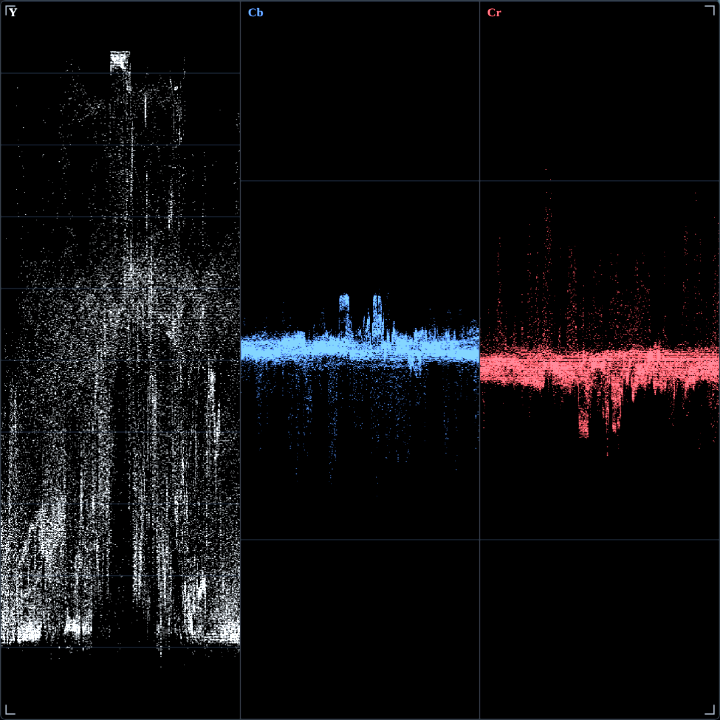
YUV Parade
Y, Cb, Cr waveforms side by side — luma plus the two chroma-difference channels, in the broadcast space your codec actually stores.
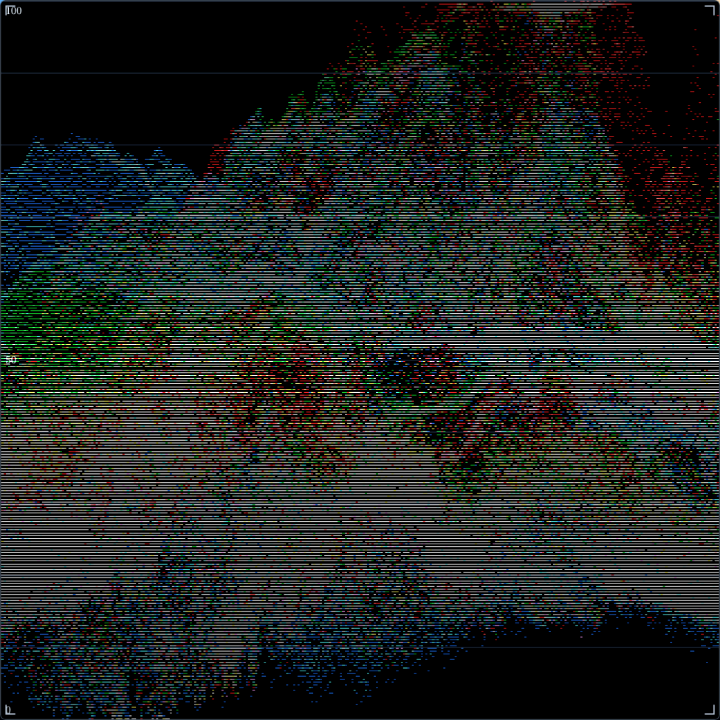
RGB Overlay
All three channel waveforms stacked on one panel — a compact channel-balance view for when screen space is tight.
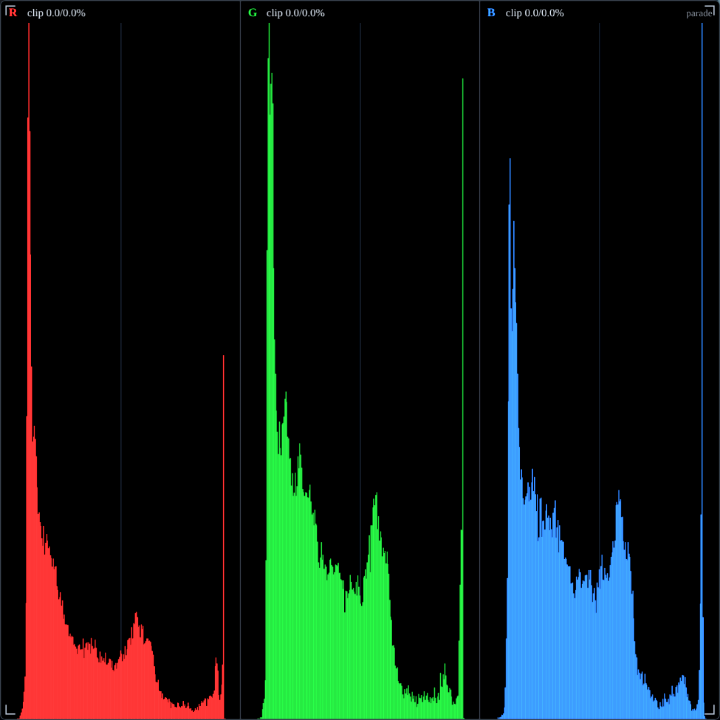
Histogram
Tonal distribution per channel (parade / overlay / luma, lin or log) with clip readouts. Watch for crushed shadows or blown highlights at the edges.
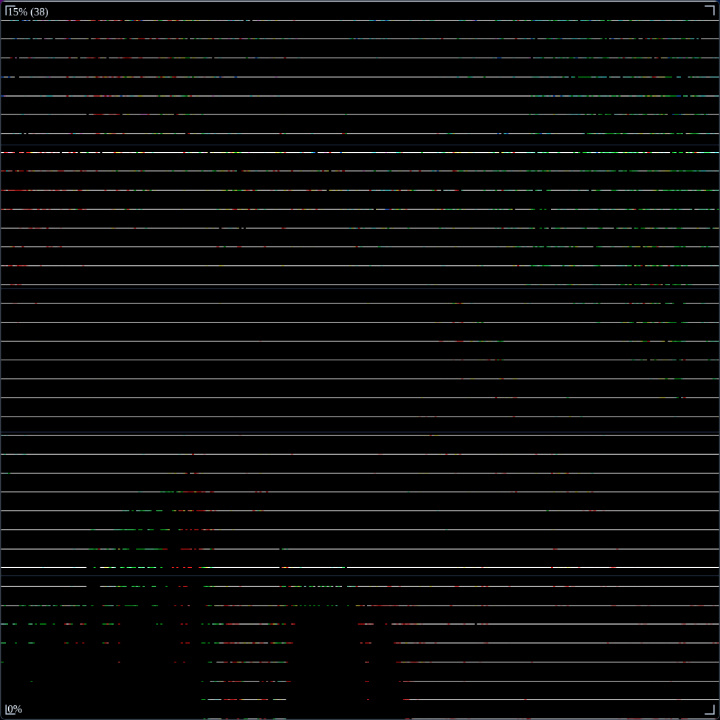
RGB Detail · 0–15%
The bottom 15% of the waveform, magnified. Catch crushed blacks, noise, and color casts hiding down in the toe.
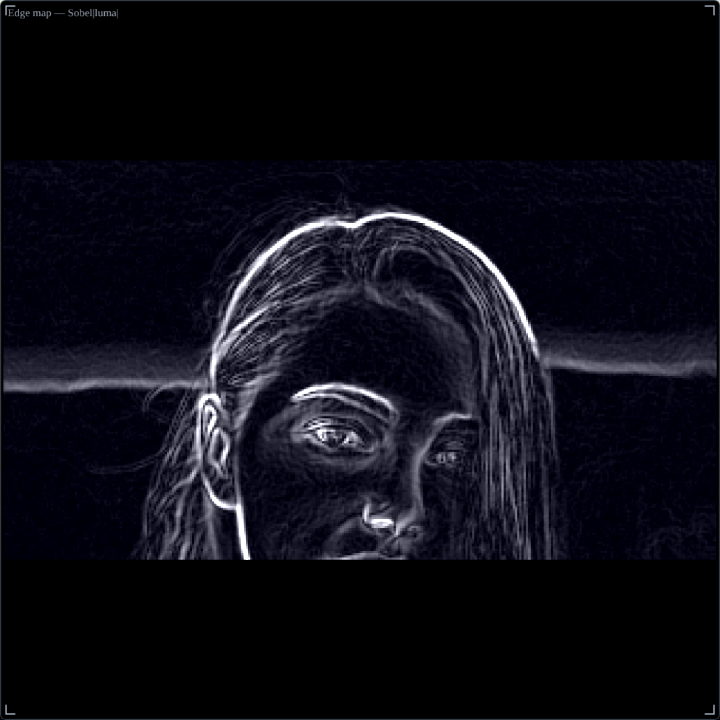
Edge Map
The raw Sobel focus signal as a white-on-black image — the most literal way to verify critical focus across the whole frame.
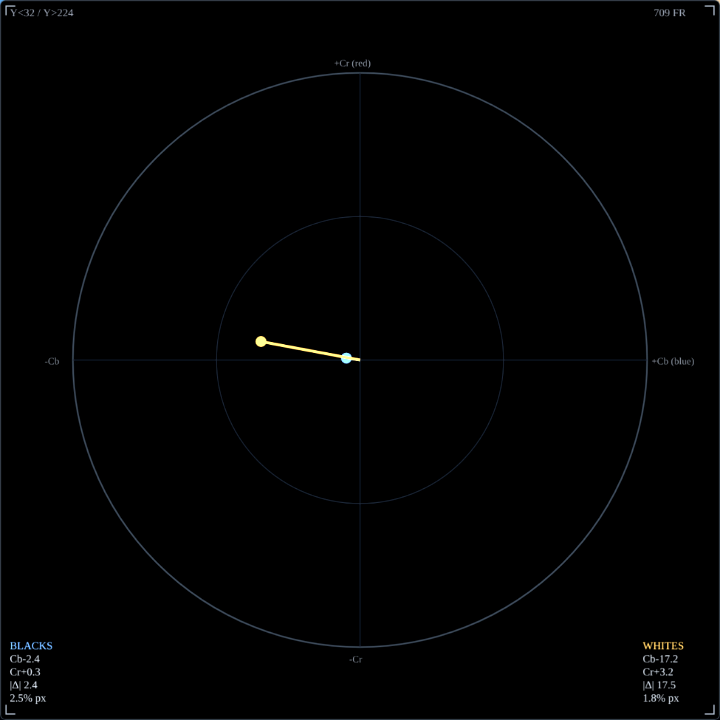
Black / White Balance
How neutral your darkest and brightest pixels really are — spot a color cast in the shadows or highlights instantly.
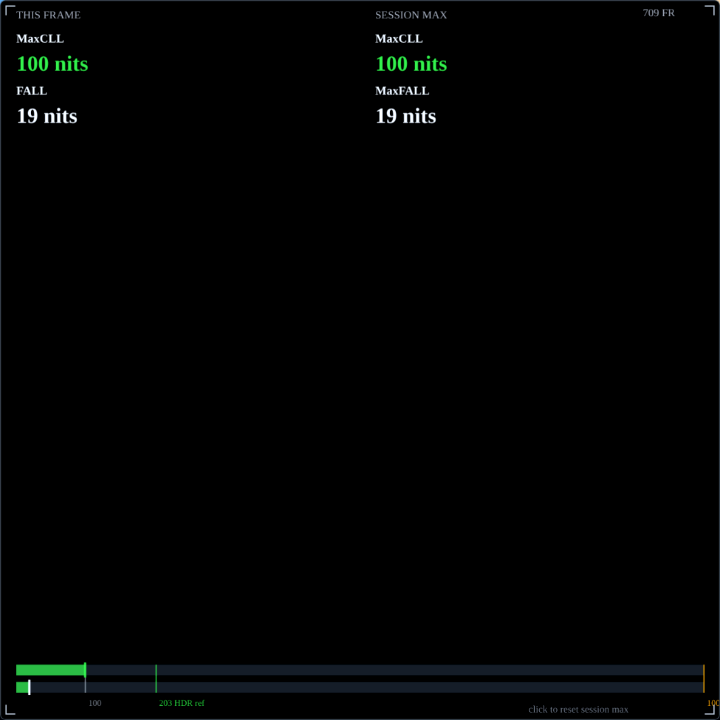
MaxFALL / MaxCLL
Frame-average and maximum content light level in nits, session-running — the HDR mastering numbers, live.
Color & Vector
See the color, exactly
Vector, chromaticity, and gamut tools that show hue, saturation, and legality at a glance — the heart of a broadcast scope suite.
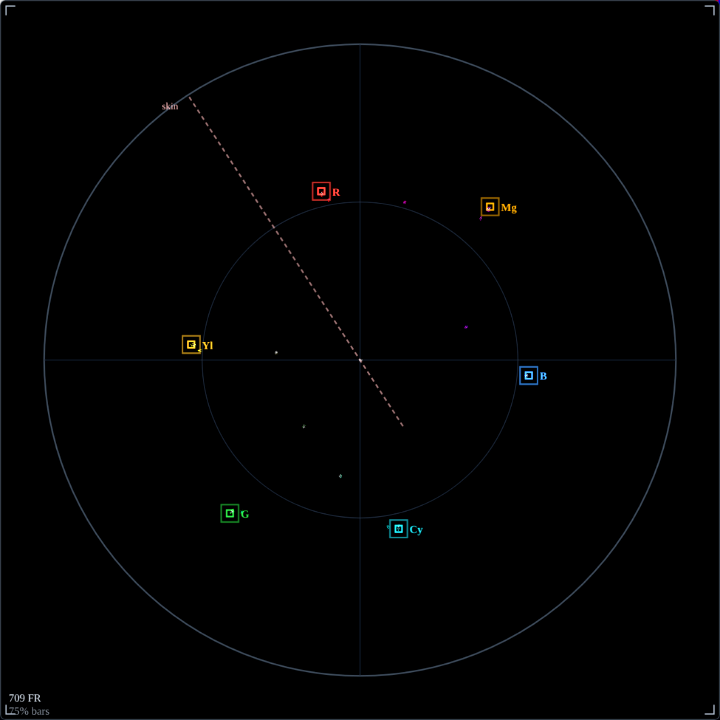
Every pixel plotted by hue (angle) and saturation (distance). Target boxes mark where 75% bars should land; here they hit their marks exactly.
Deep dive →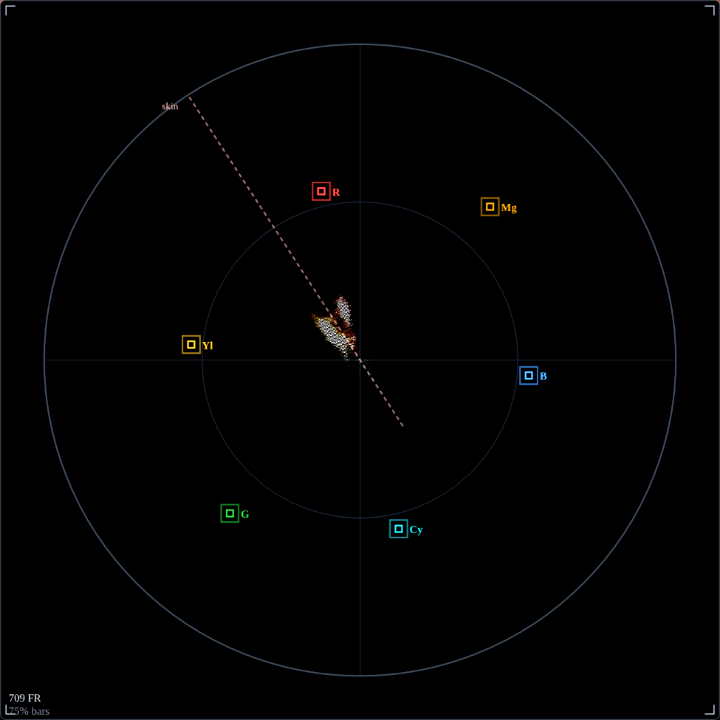
Vectorscope · live
The same scope on a portrait — skin tones cluster along the skin-tone line, an instant white-balance and saturation check on real faces.
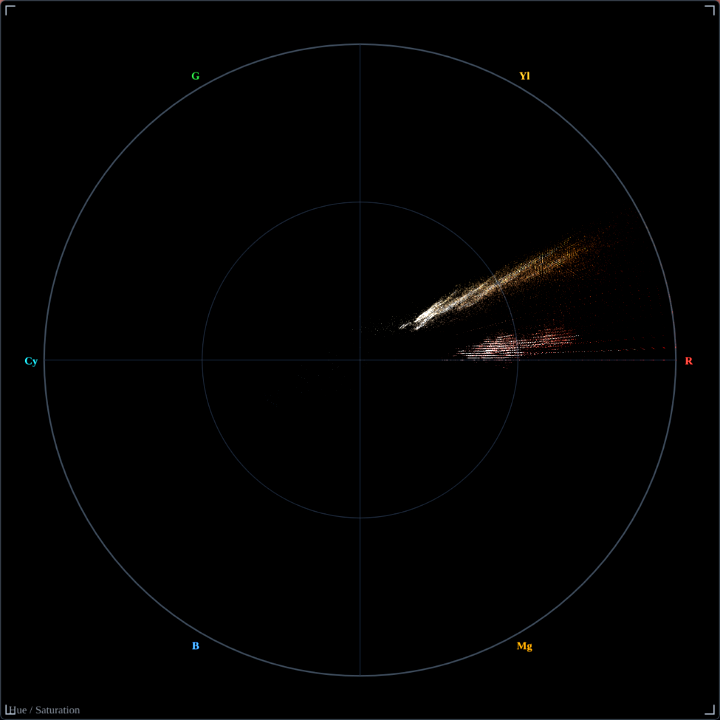
Hue / Saturation
A perceptual hue-vs-saturation plot. See where your palette sits and how hard it runs toward the primaries.
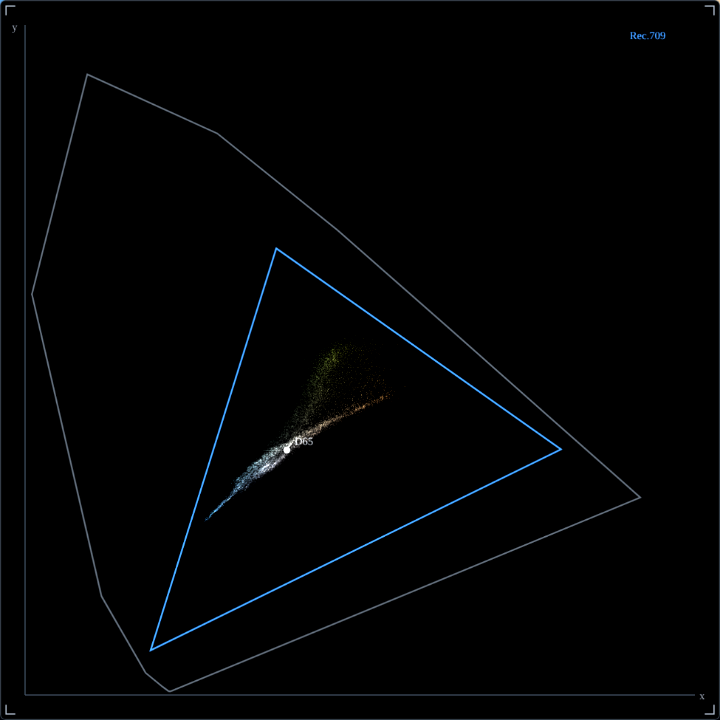
CIE Chromaticity
Colors on the CIE 1931 horseshoe (or 1976 u′v′), with the Rec.709 gamut triangle and D65 white point. See spread and anything reaching the gamut edge.
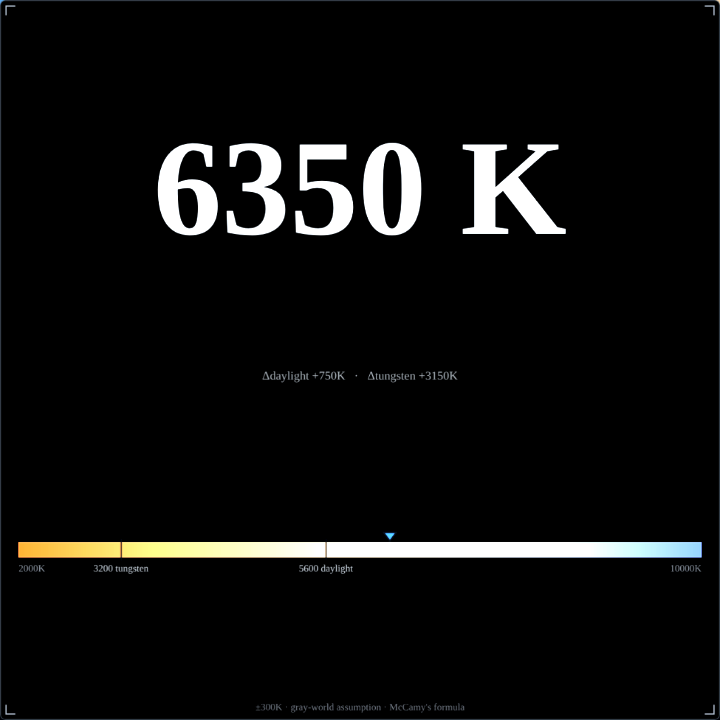
Color Temperature
The whole frame's correlated color temp in kelvin, with a tungsten↔daylight scale — a fast white-balance sanity check (McCamy's formula).
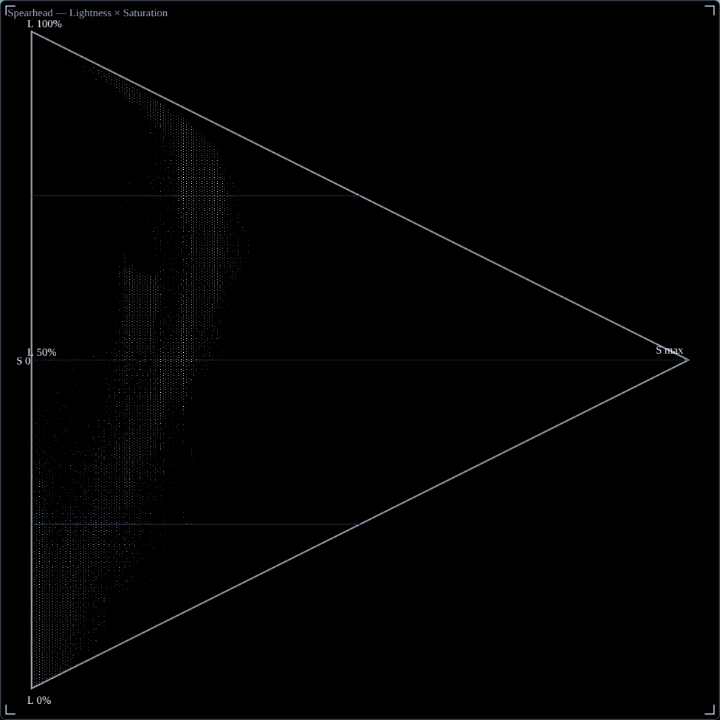
Spearhead
Luminance × saturation — the modern colorist's gamut view. See how saturation rides with brightness across the image.
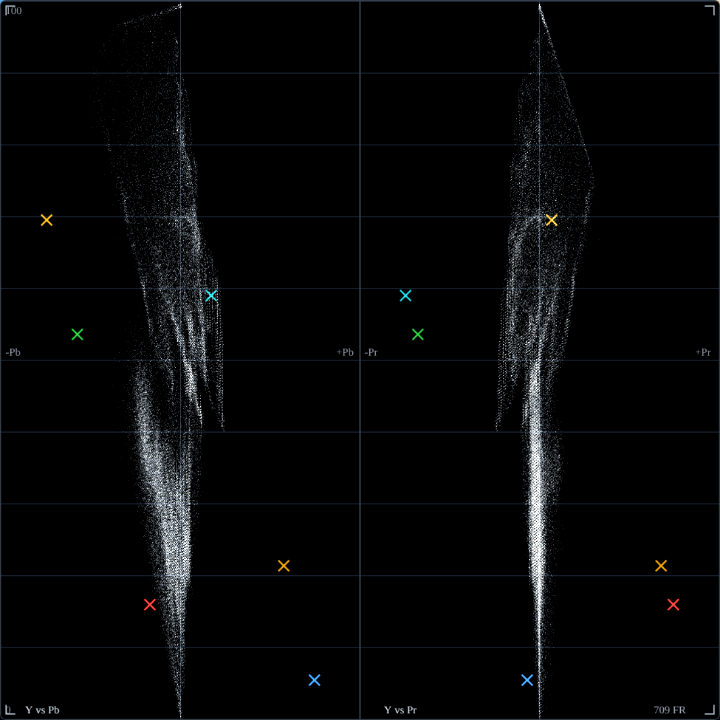
Lightning
Luma against each chroma channel in one bowtie — a Tek classic for inter-channel timing and color balance.
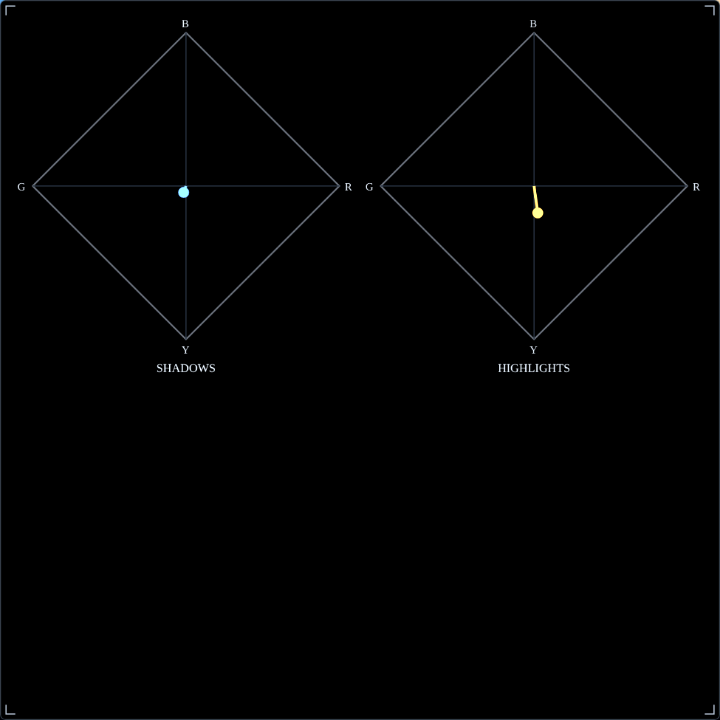
Color Balance · Diamonds
Shadow and highlight gamut diamonds. Their tilt tells you the cast — ideal for neutralizing a grade.
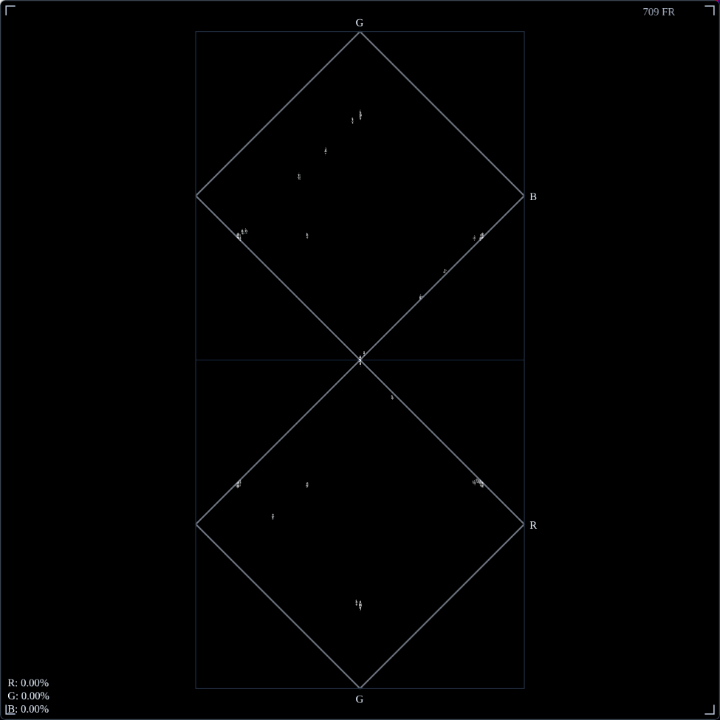
Diamond · Gamut
Tek-style gamut-legality diamond. Anything poking outside the diamond is an illegal color your signal can't legally carry.
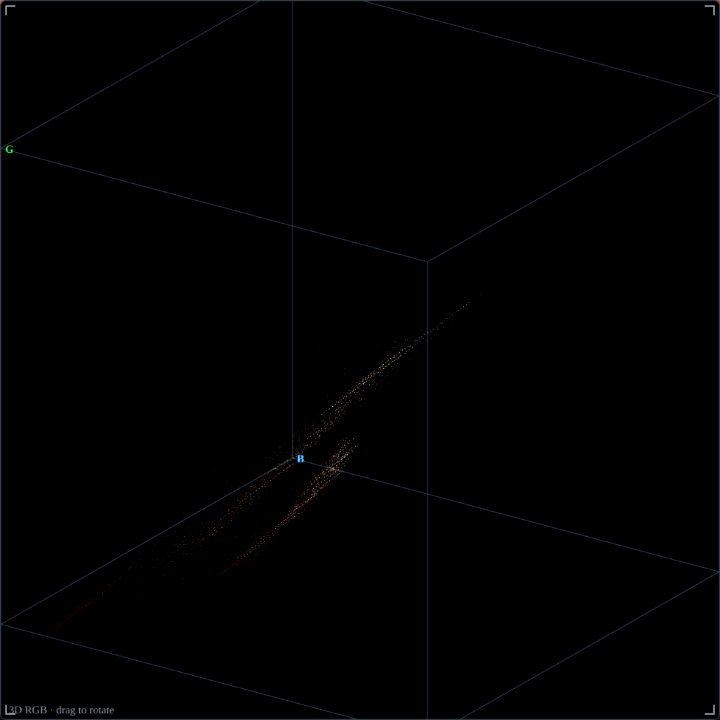
3D Color Cube
Every pixel in a rotatable RGB (or XYZ / YCbCr) cube — an intuitive look at your whole color distribution.
Audio
Hear it, and see it
Enable the mic and videoscope meters your audio too — loudness, spectrum, and stereo phase, alongside the picture.
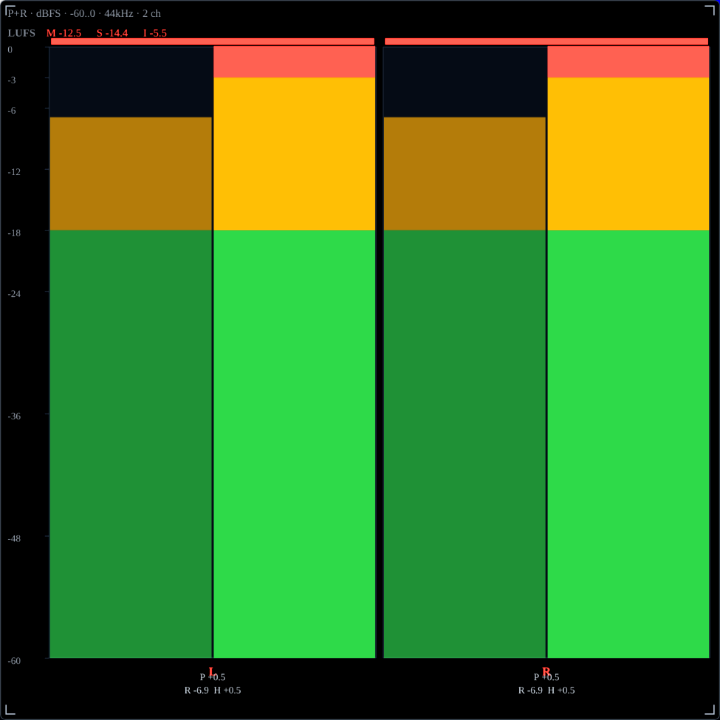
Audio Meter · LUFS
Peak + RMS bars with momentary / short-term / integrated LUFS and true-peak. Loudness compliance in one panel.
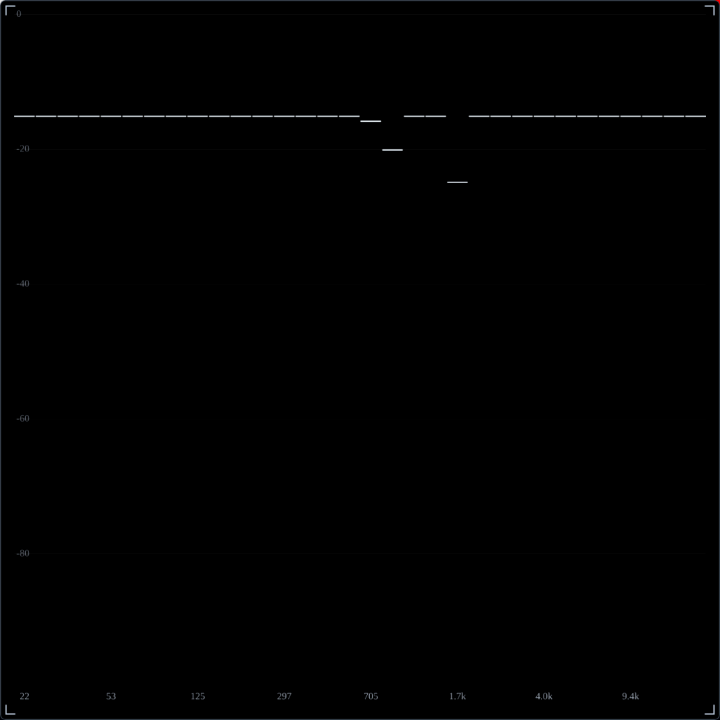
Spectrum
Real-time audio FFT with peak-hold and averaging. Spot hums, hiss, and tonal imbalance across the band.
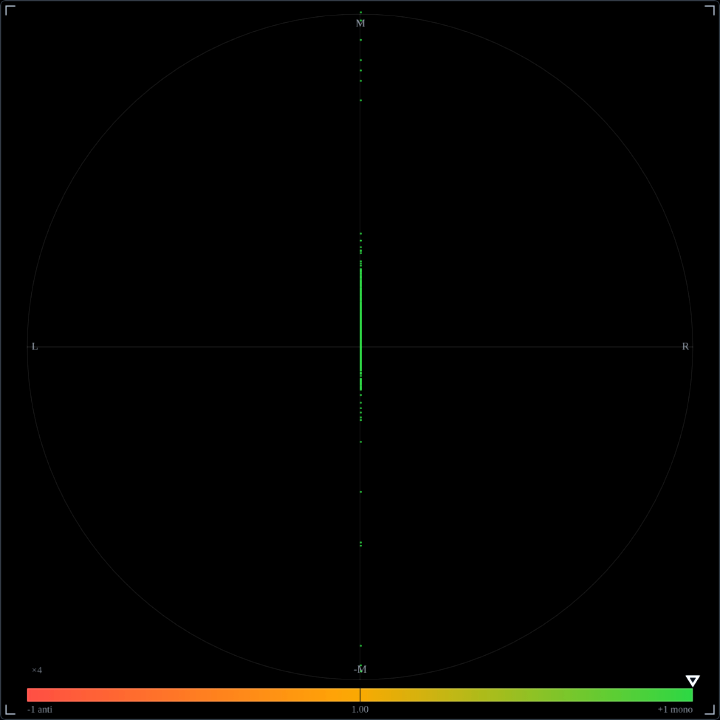
Goniometer
Stereo phase and correlation. A vertical line is mono-safe; width shows your stereo image; a lean warns of phase problems.